Pavel Morozov
I'm a reliable professional in Southeast Asia
I live and work here: Bali, Thailand, Vietnam. I'll check your choice and see it through. If the unit is wrong – I'll say so straight.
People come to me when they
- want the best possible price on the property. No one gets it cheaper
- want passive income abroad
- want to buy property safely, not by luck
- have a task: to earn in a stable currency
- want to be told straight: don't take this one
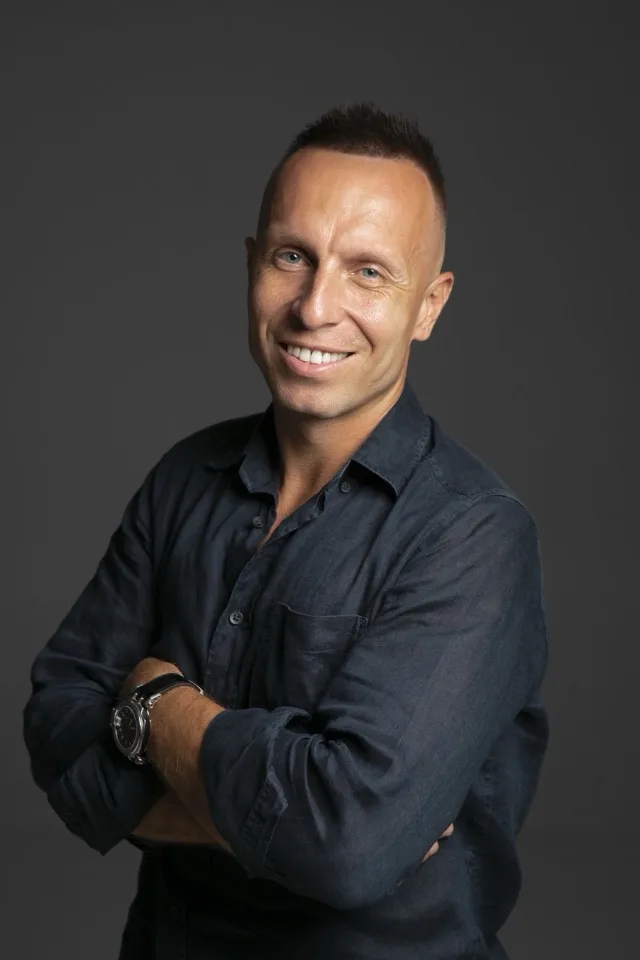
My numbers. And where each one comes from
460property deals
2300people have reached out over the years
4.5 yrsworking the Asian market
300+developers on Bali, all in my database
Where each number comes from – open it and check
460 deals
Counted across all the years and all the markets – Sochi, Turkey, Bali, Thailand, Vietnam.
There are fewer clients than deals: “I actually closed deals with around 200 clients, give or take, and some of them bought more than once.” That's where the gap comes from: 2300 people reached out over the years, about 200 of them got as far as a deal, and those 200 produced 460 deals.
What backs it up: my word and my database – exactly what any agency has when it publishes a deal count on its own site. I can show you my mailing list across all my clients – anonymised: just first names and the number of clients. There is no external register where you could check it. So judge me by the documents on your property, not by my number: those I show every time.
2300 enquiries
“I have 2300 clients I've been in contact with over my time in property.” That's contacts in my phone and mailing lists. Deals out of those are, of course, fewer.
4.5 years on the Asian market
I count it from Turkey: Mersin from 2021. Then Bali: at the start of December 2022 we flew to Bali.
Thailand and Vietnam were added in 2025 – I studied the whole market and signed agreements with all the developers.
300+ developers in the database
Right now my database holds more than 300 developers and more than a thousand projects – under construction and completed. There are property marketplaces for Asia – I'll share them with you.
From Penza to Bali. Year by year
11 May 2017 · Sochi
Property
Moved to Sochi, into a friend's agency – two years earlier we had shared an office at Megafon. Started filming property walkthroughs right away. How it actually went: “In the first two weeks I had my first deal, then a month with no deals, then two deals the next month, then another month with no deals, then four deals the month after – and off it went.”
2018 · Sochi
Left my friend's agency
Deal volume kept growing, the terms didn't. I left to work for myself, with a partner.
2021 · Turkey
Mersin
We went to scout it, then started selling Mersin. Bought an apartment each there ourselves.
2022 · Europe, then Turkey
The decision not to go back
In the summer I left for Europe for about a month. We were coming back through Turkey – mobilisation had started in Russia. I stayed and worked Turkey offline until early December.
December 2022 · Bali
Started working here
“At the start of December we flew to Bali and started working here. I studied the market and got to know the developers.” Our youngest daughter Mira was born here.
Since 2025 · Thailand and Vietnam
Three markets
I studied the markets of Thailand and Vietnam and signed agreements with all the developers. Now I compare three markets and say straight where buying makes sense in your case – and where it definitely doesn't.
And before property, this happened
1989–2011 · Penza, St Petersburg, the army
Born in Penza in 1989. Started school in 1996, finished in 2006.
In 2006 I got into the Naval Academy in St Petersburg. Four years later I dropped out. Then a year in the army.
In 2011 I came back to Penza, to my great love. We married in 2013.
2011–2015 · Megafon: from the call centre to corporate accounts
Joined as a call centre agent in April. “I handled about 200 calls a day on the line. Ended up beating the sales plan. Became a mentor, started teaching people how to talk on the line.”
“In two months I became the best employee of the contact centre – that's 2000 people.” Then I decided to try for a role handling major corporate accounts. There was a competition, ten people per seat. And I made it! “I was 21.”
Left in 2015: there was no growth left in it.
2015–2017 · Commercial director
Came in as commercial director at a large window company. Grew the company's sales from 60 to 110 million rubles in a year – KPIs, people, a sales process. That was my last salaried job.
That's not how I'm going to work
This was back in Russia, right at the start. A client came to a colleague, and he went: sure, I'll sell him some dead stock where the commission is higher – simply because I'm out of money and I need to make as much commission as I can right now.
And that's when I understood that that's not how I'm going to work, that's not how I want to work.
How it works for agents
- Any agent's job is to run you around as fast as possible and get you to a deal, because he has other clients. Minimum work, maximum result.
- He will never criticise your choice: his job is to get you to agree faster.
- People chasing commission will sell any dead stock. I was one of them, which is why I know it really works that way.
How it works with me
- I don't refuse to earn a commission. That's all there is to know about it.
- “Maybe you don't need this property at all.” When you haven't paid a broker, he will never say that. I'll tell you honestly when you come to me for a review.
I always check the property. Always
Always
- I put myself in the client's place. I try to understand what he actually wants: I ask why he really needs this property. Why, why, why. And once he opens up – that's when I give him feedback.
- I always check the property. Always.
- A call first. Only after it do I have the full picture and start working. Before the call there is no point.
Never
- Talking someone into it – buy, buy, buy – never in my life. Let him work with whoever he wants. If a person doesn't need it, he won't.
- I will never sell a unit just because the commission on it is bigger.
- I will never sell a unit that doesn't match the client's goal. He needs income here and now, and I sell him a build that completes in three years? That's absurd.
No building permit – I go no further
Seven things I check on every property. Take them and check for yourself – with me or without me.
The building permit
If it's under construction, we look: is there a building permit. No – that's a red flag.
The land agreement and extension terms
If it says the extension will be at the market value of the land and of whatever stands on it – that's a very bad deal.
It means the developer has a very weak agreement with the landowner, and he will most likely be pushed out once the first lease term ends.
Payments tied to construction stages only
Payment for an off-plan unit is tied to construction stages. To the stages only – not to some payment schedule just because.
The SLF clause in the contract
A mandatory clause: if the developer fails to obtain the SLF within the agreed period, you have the right to take all your money back plus 10% per annum in compensation.
Who has put in more – you or the developer
Ideally the developer has already spent more money than you are putting in. That one matters on principle.
Is the developer actually funded
I look at whose money the construction is running on and how many projects the developer is carrying at once.
It happens that they open a dozen and a half projects at once with nothing delivered: the money from the first builds goes into the next ones. You can see it coming – the assets have to cover the obligations already taken on.
Too many projects at once
It happens: the developer is fine, the documents are fine, but he has too many projects running. I don't recommend those either.
There are more than three hundred developers in the database, and the database is in the marketplaces – there is plenty to choose from.
I count out loud. Here's what it looks like
I don't hand you a conclusion, I do the maths in front of you. Here's a villa. What can you rent it for? Fifteen hundred dollars. Fine.
You buy the villa for 300 thousand dollars. Over a year it brings you 18 thousand dollars. That's it. Roughly, what is it – 15 plus 3. Eighteen thousand dollars. Which makes it 5% yield. Are you happy with that?
Those are the numbers of one specific unit, not a market norm. The one next door will be different – which is why we run the maths again every time, off the management company's reports rather than the developer's price list.
We arrive at the site and promise nothing
I know in advance which units we're viewing today and which ones tomorrow.
We take a car, get in together, drive. On the way I talk through the details: why this project suits him and that one doesn't.
We get to the units and look. We promise nothing at first. Nothing at all. We just look and read his reaction: what he likes, what he doesn't.
After one, two, three days of driving around it becomes clear where it's worth looking further. That's when the negotiations on terms start. How I run those I won't tell you: that's my business and my approach.
And the heat is brutal, of course.
Then there's usually a deposit. After that we can have dinner. Sometimes a waterfall.
Legal details I explain in voice notes: he asks the questions – how the profit works, how you get the SLF certificate.
I only work with people who actually need it
Who I work with
- “I want to work only with people who need it. Right here, right now.”
- That said, I don't rush anyone. The usual story is a month, a month and a half, two – that's a normal deal cycle. Some clients think for half a year and then come back.
- With people who give me specifics. Without them I'll be driving you round the whole island.
Who comes to me
- The owner of a large Russian company. Came for passive income in dollars, took an off-plan unit. It got built. Then he bought a second one.
- An entrepreneur who already owns property in Russia and in Europe. Took two units from one developer at ground-zero stage. Both completed, both rented out.
- Someone who makes his money on the markets. Bought a completed unit, rents it out.
Who I won't work with
- If someone has already figured out the whole market, has lived here a long time and has the basic skills of an agent – I won't work with him.
- If you think there's no point listening to me and you'll question every word while I prove myself – I definitely won't work with people like that either.
- There was a client I gave the contact of the actual owner of a unit – so he could confirm it himself. He still did it his way. Fine, go ahead and buy. But I did warn you.
My biggest failure
I messed up. No argument there, I admit it honestly. I had the nerve to say it – and the strength not to give up.
It's about a residential complex on the Bukit that I wanted to build. I wanted to enter the market straight away with a bright, big, beautiful project.
My main mistake: I believed in myself and took on a project too big for me. The moment I understood that, I stopped it. Told everyone honestly: full stop.
I didn't walk away, I didn't give up, I didn't abandon the project – I decided to see it through. The main thing is not to let anyone down, and I didn't let anyone down. For me it's a loss-making project.
The only people who never make mistakes are the ones who never do anything.
Where that project stands now
Negotiations are under way. The matter isn't closed, and I'm seeing it through – actively.
If you want the detail – I'll tell you in person how it happened and where it stands.
Why I'm putting this out at all
Because I want to spare people the trouble and the mistakes. I made those mistakes myself – so let my own case show how not to do it.
The scariest part is trusting someone you're seeing for the first time
What clients say
- “The scariest part was making the transfer, trusting someone you're seeing for the first time.”
- “We're afraid to transfer, we don't know you, we don't know the developer, what if it's fraud, what if we get scammed.”
What I answer
- Trust the documents I show you. Trust the developer's track record. Trust the law firm that checks your contract.
- The numbers, the papers, the documents – that's what to lean on. On the actual return of a specific unit. That matters more than promises.
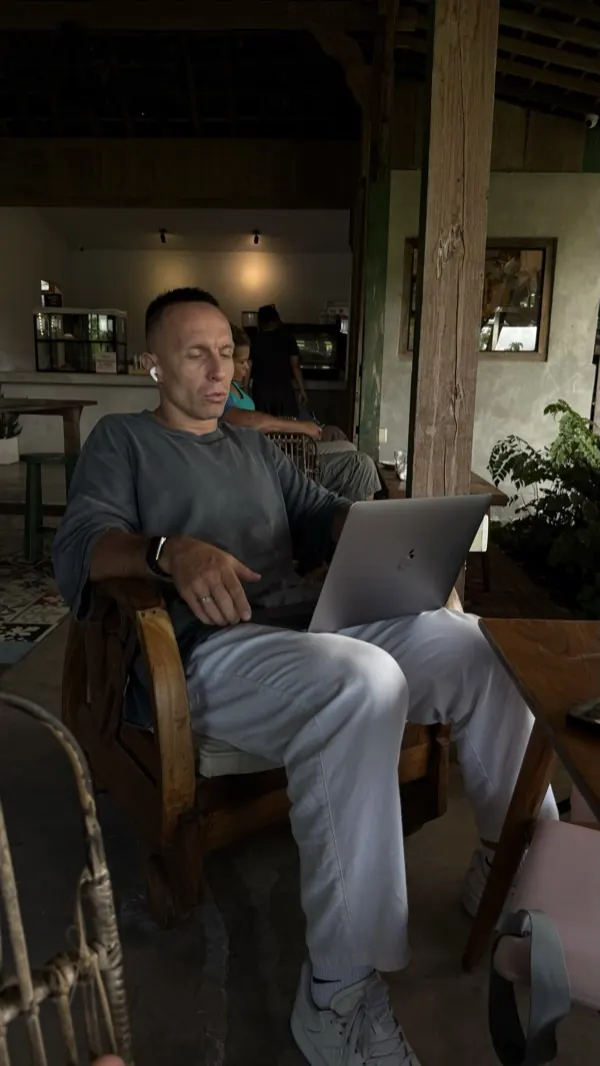
Up at 7:30. The body first, the phone after
Up at 7:30 – roughly, give or take, sometimes earlier, sometimes later. Then exercise: squats, stretching, push-ups. Every day.
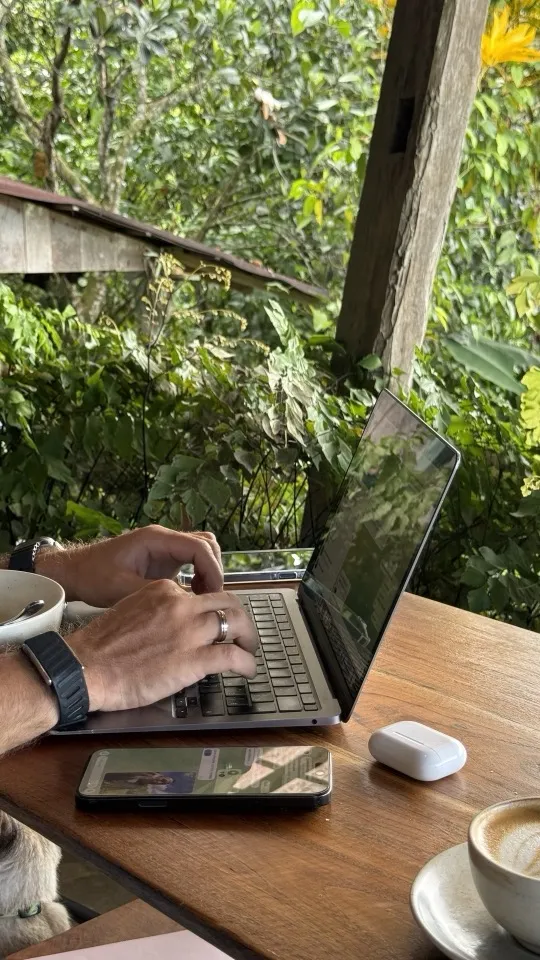
After that I have breakfast at a cafe. Then the gym – and I work from there too.
And only then clients. Shortlists, calls, presentations. When clients are on the island, I'm out on viewings with them all day.
I get around on a bike. I usually eat and work in the same place.
In the evening I go out to watch the sunset. Then dinner. I rarely cook, breakfasts only. Then back into the phone, and off to sleep.
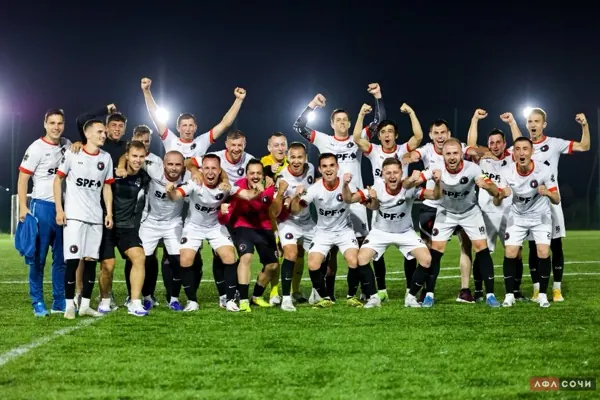
Sometimes there's football, sometimes the banya, sometimes friends. We go places for no reason too – just not this particular week.
I don't drink and I don't smoke
Why don't I smoke or drink? Well, it's my own deliberate choice.
I didn't drink any alcohol at all from 19 to 30. Not a gram. Eleven years without alcohol. Then there was a period when I'd have red wine now and then.
As of now I've made the final decision that I won't smoke or drink. Because I don't get much of a kick out of it. All I do is lose energy. And I don't want the quality of my life getting worse.
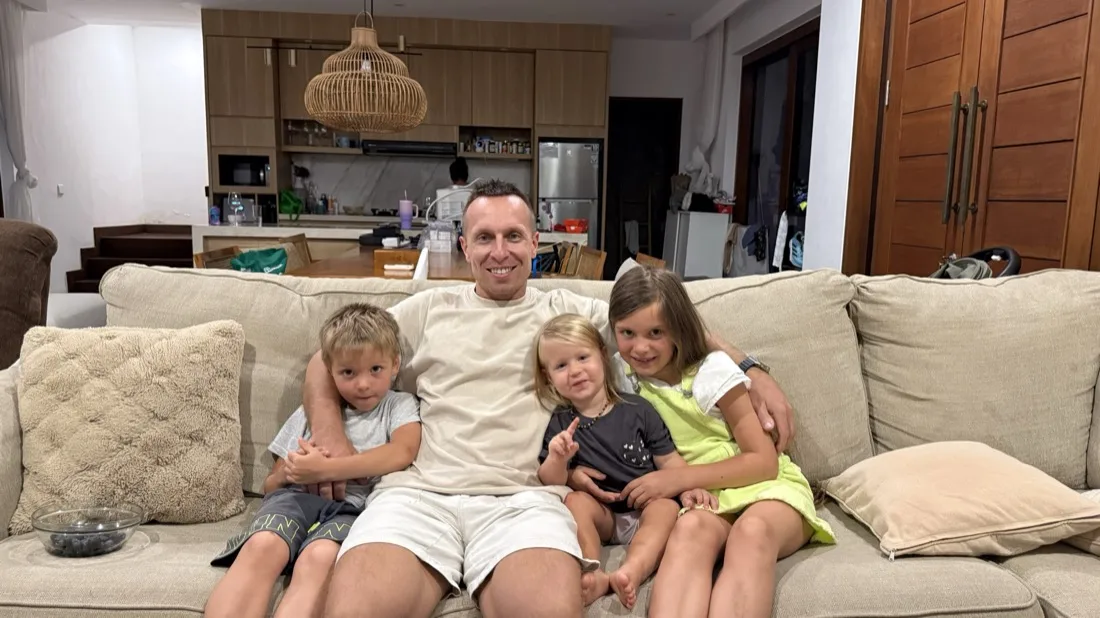
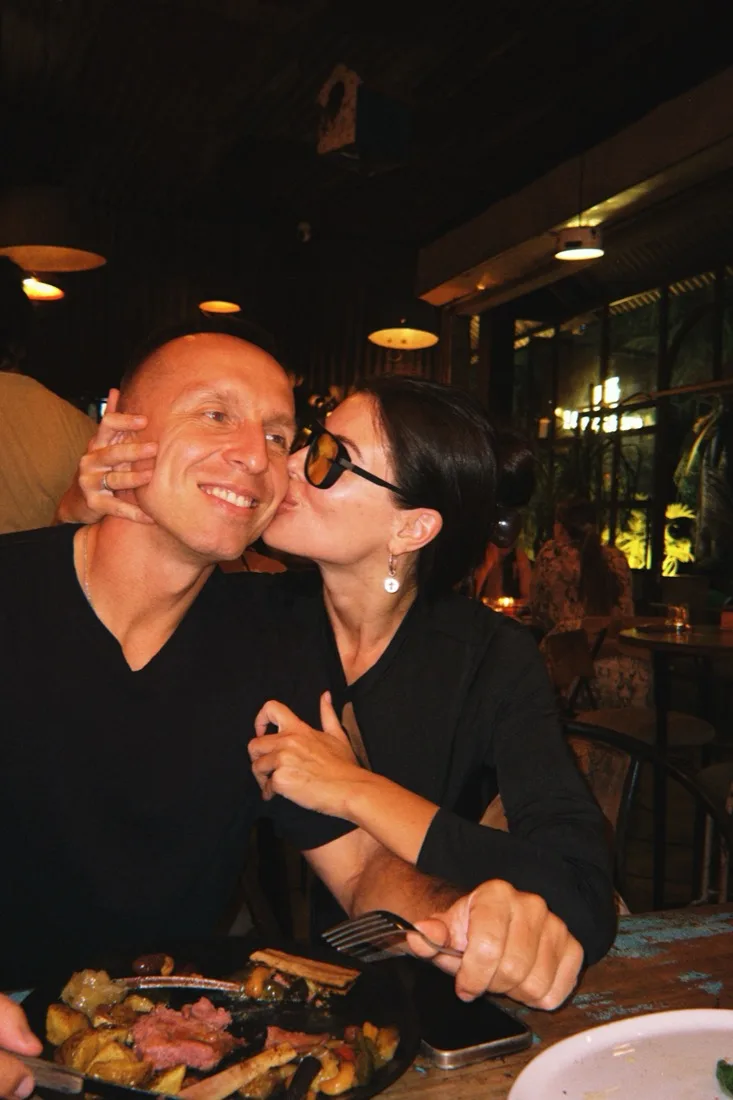
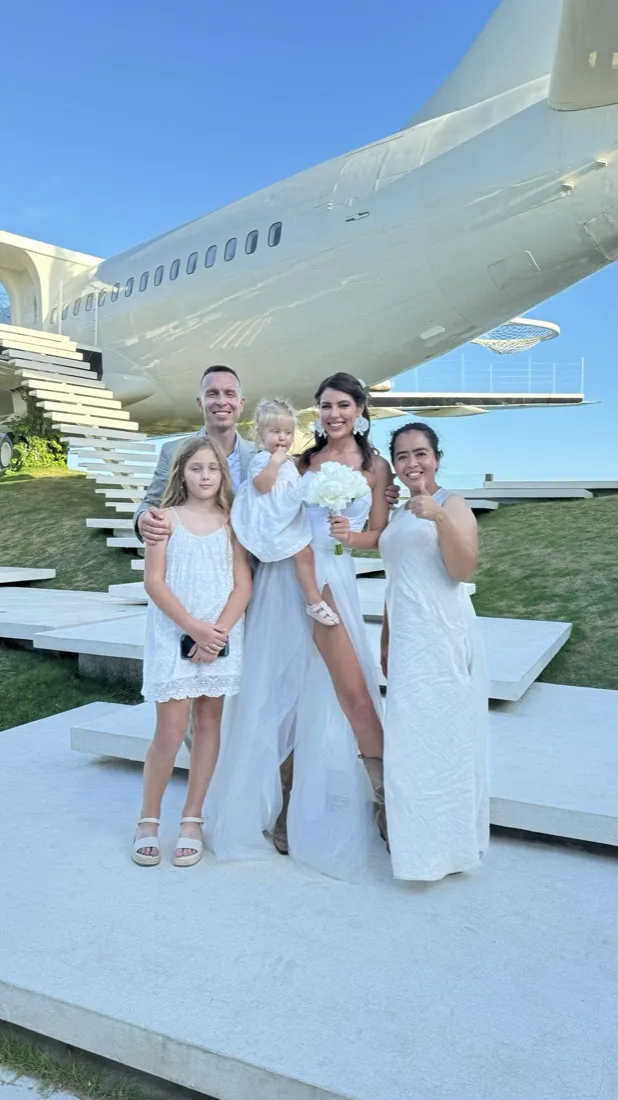
Married, three kids. The youngest was born here
I'm married, I have three children, two of them from my first marriage.
We flew here specially for the youngest to be born – she was born here, on Bali. The kids grow up in the local environment and speak three languages: Indonesian, English and Russian.
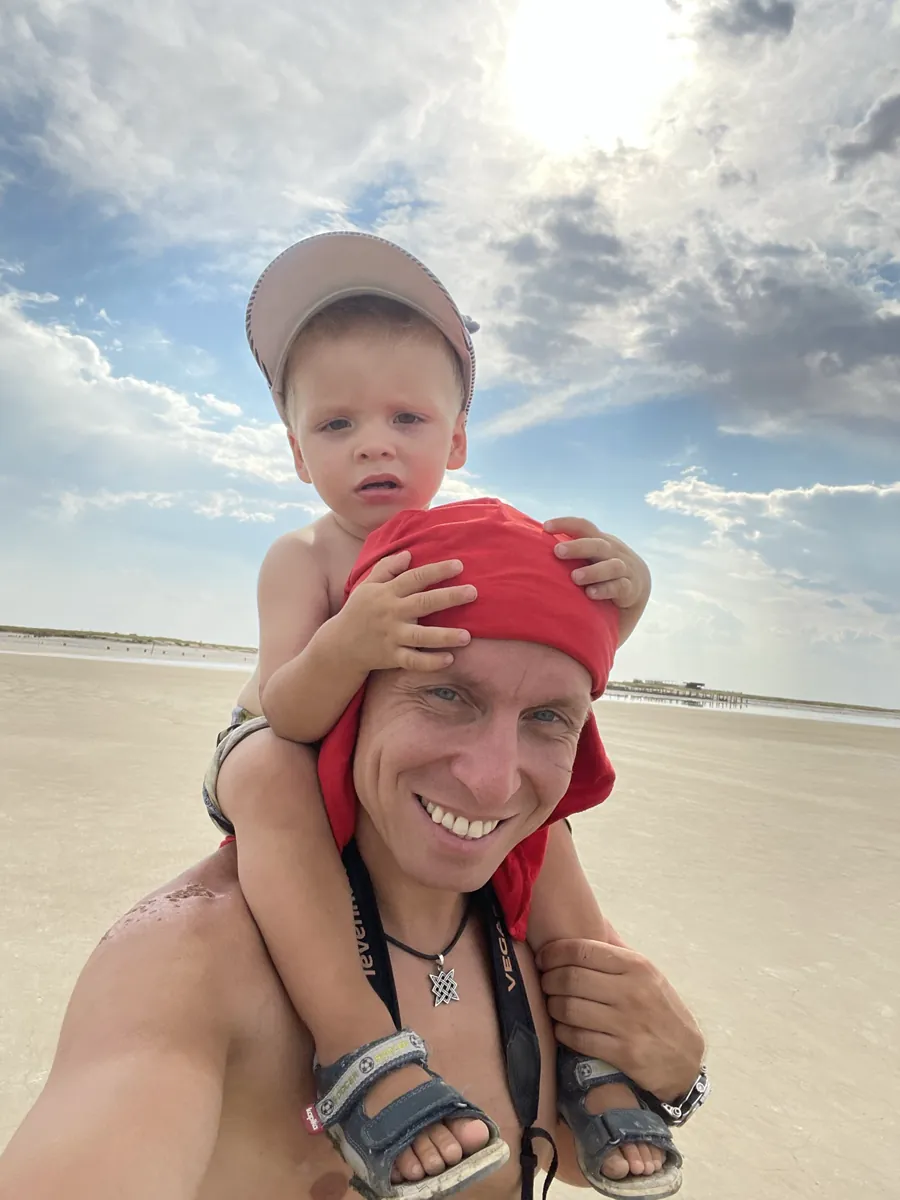
I believe children are happiness. With children you live through another path, another rebirth happens. You see his wins and they feel like your own. That part is really something.
My son looks very much like me and like my father. A photocopy. My father, sadly, is no longer with us.
The family line
We don't really belong to ourselves. We are only the link between the past and the future.
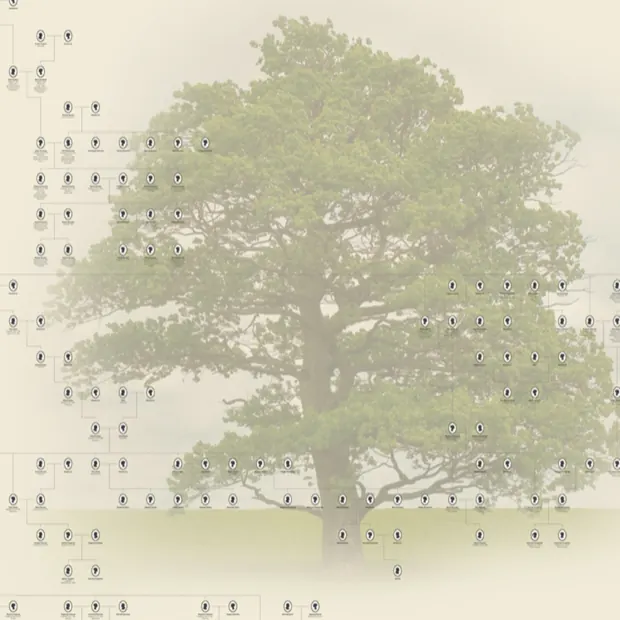
I've mapped 12 generations, back to the 16th century. I did it at the State Archive in Penza: two years of going there, and more than 100 parish registers read in that time.
They fought, they lived through epidemics, wars, famine, plague, the frosts – and they went through all of it not so that we would forget them, but so that we would remember them.
What right do I have to deceive anyone, when thousands of people are looking at me from back there, out of the dark of the centuries, and I answer to them.
How this helps in the work
“When things get really hard, I always turn to the strength of the family line, to my ancestors, and I say to them: help me work this situation out, how to solve it, how to act more rightly. And they always help me.”
What turned up in the archives
My grandfather was born in 1916 and was the sixteenth child in the family. His older brother left for the war in 1914, was taken prisoner and only came home in 1920 – by then they had written him off as missing.
There are many stories like that in there. Those are the ones worth telling.
What I hear about myself
This is me retelling it, so these are my words. Theirs are on the reviews page: in their own voice, on camera and in writing. Don't check me, check them.
- Your own man, someone you can turn to and rely on in any situation
- He knows how to be a friend
- He never backs off from his goal, never backs off in the face of trouble
- He'll tell you straight if a unit doesn't suit you – or if the market doesn't suit you at all